Ellora Caves Tickets Logo
English| EUR
Book Now
Open today · 09:00 – 17:30

Ellora Caves Tickets

Ellora Caves Tickets — ASI Entry to the Kailasa Temple

Basalt carved into shrines, faith cut from a single hill.

4.7 /5 · 2400 reviews
142K+ travelers chose this
Free Cancellation
Right now: Moderate — summer weekday Midday basalt surfaces get hot; carry water and a hat
3-5 hours recommended
1 Languages
Up to 20 guests
Free Cancellation
Free cancellation Instant confirmation Mobile voucher Verified partner Skip-the-line
34
Total caves
12 Buddhist, 17 Hindu, 5 Jain
12/17/5
Religious groupings
Buddhist / Hindu / Jain caves
~100 yrs
Kailasa build span
Carved top-down from one rock
250,000t
Rock removed
For Kailasa Temple alone
6th-10thC
Centuries spanned
Continuous carving at Ellora
Choose your ticket

Ellora Caves tickets at a glance

Compare fares, pick the fit — all bookings are mobile-voucher and eligible for free cancellation where shown.

Private Ajanta & Ellora Caves 2-Day Tour from Aurangabad 48 hr
Luxury / Private

Private Ajanta & Ellora Caves 2-Day Tour from Aurangabad

4.9 (26)
€41
  • Private experience
  • Personal attention
  • Premium amenities
  • Free cancellation
Book this ticket
Ajanta & Ellora Caves 2-Day Private Tour from Aurangabad 48 hr
Luxury / Private

Ajanta & Ellora Caves 2-Day Private Tour from Aurangabad

4.8 (66)
€35
  • Private experience
  • Personal attention
  • Premium amenities
  • Free cancellation
Book this ticket
Compare options

Compare Ellora Caves ticket options

Experience FromDurationRatingTransfersGuideFree cancel. Price
Guided Experience
Most popular
Ajanta & Ellora Caves Full-Day Tour from Aurangabad
Aurangabad10 hr★ 4.8 €27 Book →
Luxury / Private
Private Ajanta & Ellora Caves 2-Day Tour from Aurangabad
Aurangabad48 hr★ 4.9 €41 Book →
Luxury / Private
Ajanta & Ellora Caves 2-Day Private Tour from Aurangabad
Aurangabad48 hr★ 4.8 €35 Book →

Are Ellora Caves Tickets Worth the Price?

Worth it for anyone drawn to rock-cut art

At 600 INR per foreign adult, Ellora Caves Tickets buy access to a rare density of achievement: 34 rock-cut monuments spanning Buddhist, Hindu, and Jain worship, all inside one ASI-managed UNESCO heritage complex. Do the value math. That single fee covers unrestricted hours among the caves and, above all, the monolithic Kailasa Temple — carved top-down from one basalt hillside, no assembly, no seams. Weighed against the sculptural detail and the scale of what was excavated, the price reads as modest for a full day of Ellora rock-cut caves tours. It pays off for history buffs, architecture students, and travellers who linger over craftsmanship. Casual visitors expecting a quick photo stop will feel the fee less justified, since the reward is in slow exploration. If you commit real time to an Ellora Caves Tickets tour, the return on that entry fee is high.

What makes it worth it

  • 34 caves across three faiths, one fee
  • Kailasa Temple alone justifies the price
  • Unrestricted time inside the ASI complex
  • UNESCO heritage craftsmanship at modest cost
  • Dense sculptural detail rewards slow viewing

Keep in mind

  • 600 INR foreign rate above domestic pricing
  • Rushed visits leave value unrealized
  • Sprawling site demands stamina and walking
  • Closed Tuesdays, so plan accordingly

Bottom line: Give it a full unhurried day and the Ellora Caves Tickets tickets return far more than their 600 INR cost.

Head to head

Ellora Caves Tickets vs Ajanta Caves: Which Should You Visit First?

Book Ellora Caves Tickets first if you have only one day: its rock-cut Kailasa Temple and mix of Hindu, Buddhist, and Jain shrines sit far closer to Aurangabad than Ajanta's painted gorge.

Top pick
Ellora Caves
Ajanta Caves
What you see Buddhist murals and cave paintings
Religious scope Buddhist monastic caves only
Distance from Aurangabad 105 km (2.5–3 hr drive)
Architecture style Vihara and chaitya cave halls
Typical visit duration 4–5 hours
Photography rules Flash strictly prohibited
Which to pick if short on time Needs a dedicated full day

Verdict: With one day, most travelers pick Ellora Caves Tickets for the shorter drive and architectural range; with two days, add an Ajanta Caves tour to see the murals Ellora does not have.

Featured Experiences

Popular Ellora Caves tours & activities

Hand-picked experiences loved by thousands of travelers

Recommended Experience

Powered by GetYourGuide

Another traveler favorite

Powered by GetYourGuide
Ajanta & Ellora Caves All-Inclusive Day Tour from Aurangabad 10 hours Free Cancellation

Ajanta & Ellora Caves All-Inclusive Day Tour from Aurangabad

Full-day, all-inclusive trip to the UNESCO-listed Ajanta & Ellora Caves, with private AC car and guide.

4.3 (23)
FromFrom €28.21
See details
Ajanta & Ellora Caves Full-Day Trip from Aurangabad 1 day Free Cancellation

Ajanta & Ellora Caves Full-Day Trip from Aurangabad

A same-day journey to two UNESCO cave complexes, with private car, guide, and airport transfers.

5 (10)
FromFrom €40.84
See details
Ajanta & Ellora Caves Tour from Mumbai or Aurangabad 11 hours - 2 days Free Cancellation

Ajanta & Ellora Caves Tour from Mumbai or Aurangabad

Discover two UNESCO cave complexes carved with 1,500 years of Buddhist, Hindu & Jain art.

4.9
FromFrom €45.38
See details
Ajanta, Ellora & Bibi ka Maqbara Day Trip from Mumbai 10 - 11 hours Free Cancellation

Ajanta, Ellora & Bibi ka Maqbara Day Trip from Mumbai

Fly from Mumbai to explore two UNESCO cave complexes and the 'Mini Taj' in a single action-packed day.

4.8 (4)
FromFrom €34.03
See details
Ajanta & Ellora Caves 2-Day Tour from Nashik 2 days Free Cancellation

Ajanta & Ellora Caves 2-Day Tour from Nashik

Two-day private journey from Nashik to two UNESCO cave complexes and a Mughal masterpiece.

4.8
FromFrom €64.89
See details
What you'll see

What you'll see at Ellora Caves

Kailasa Temple

Kailasa Temple

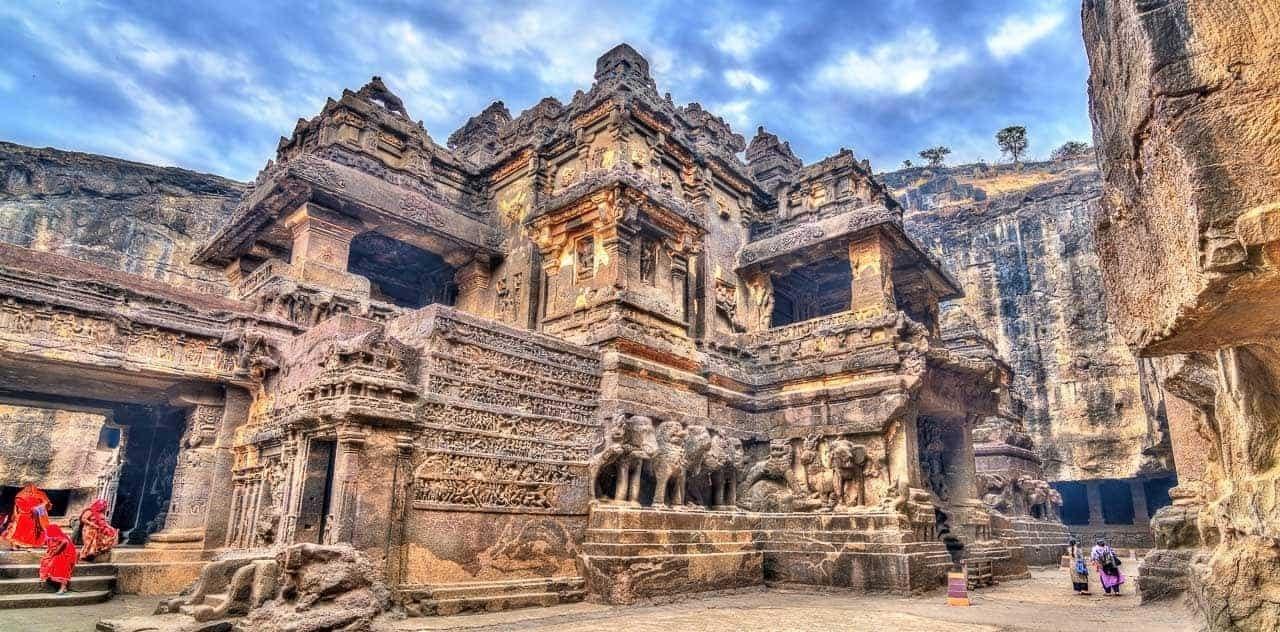
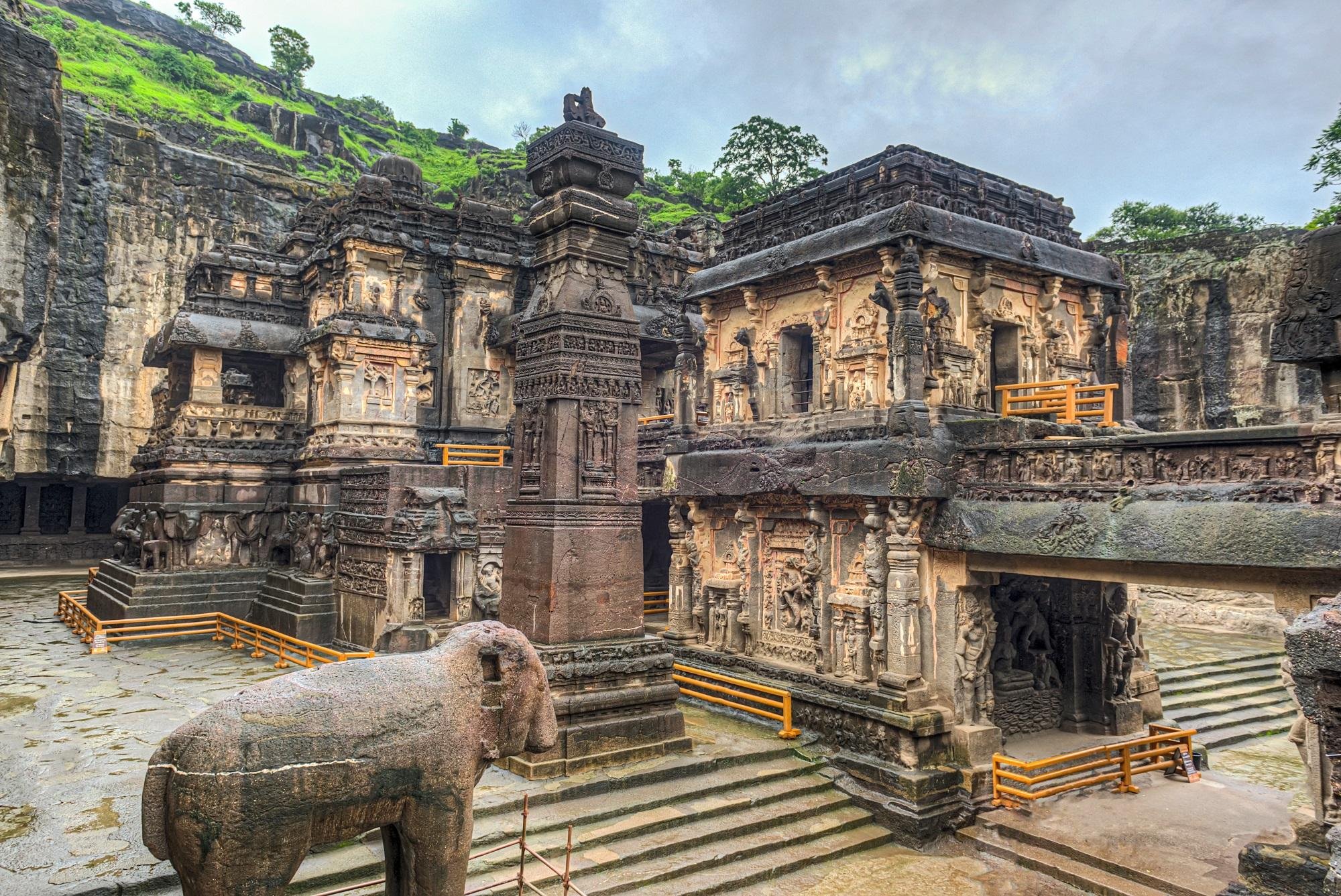
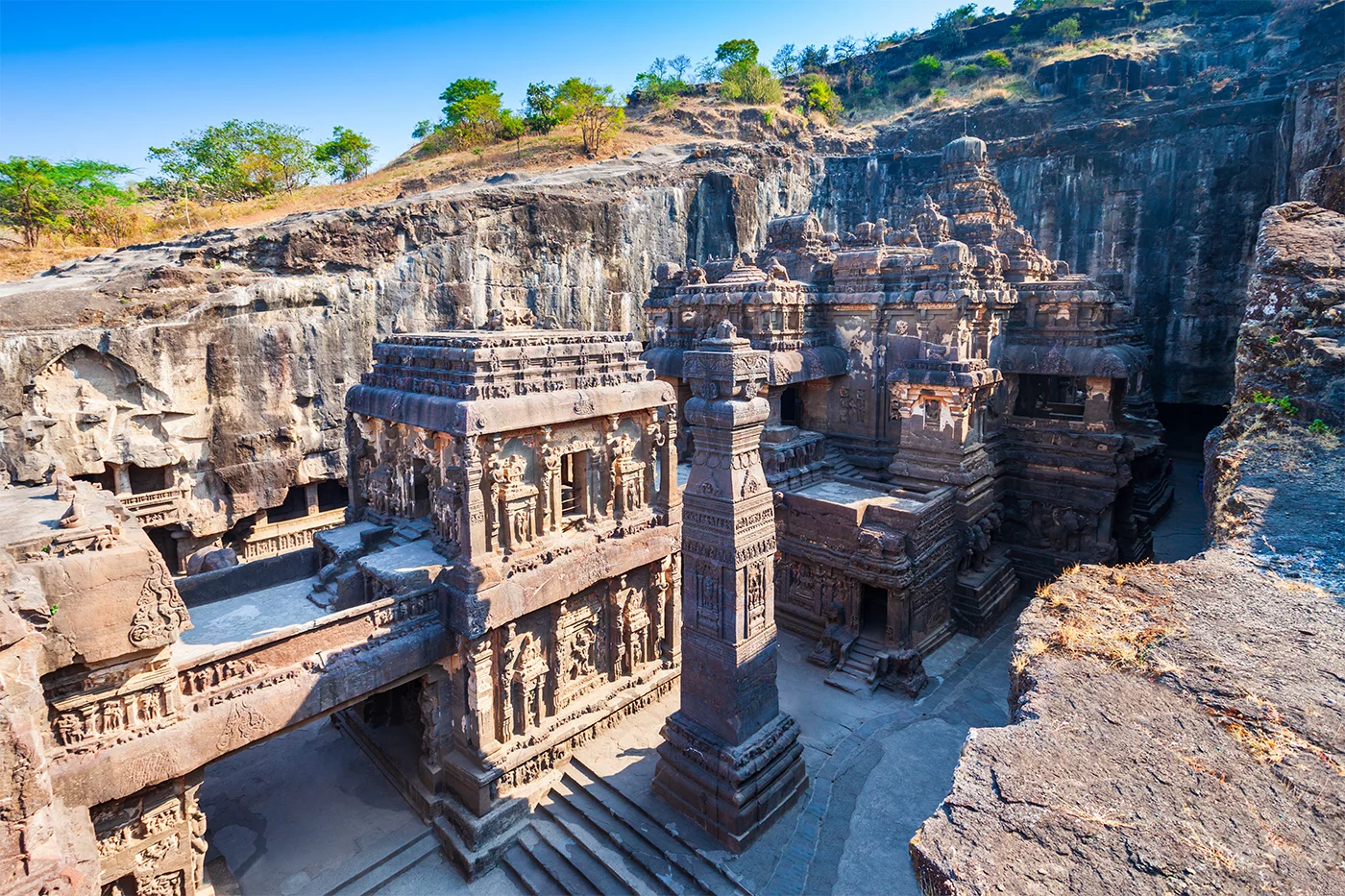
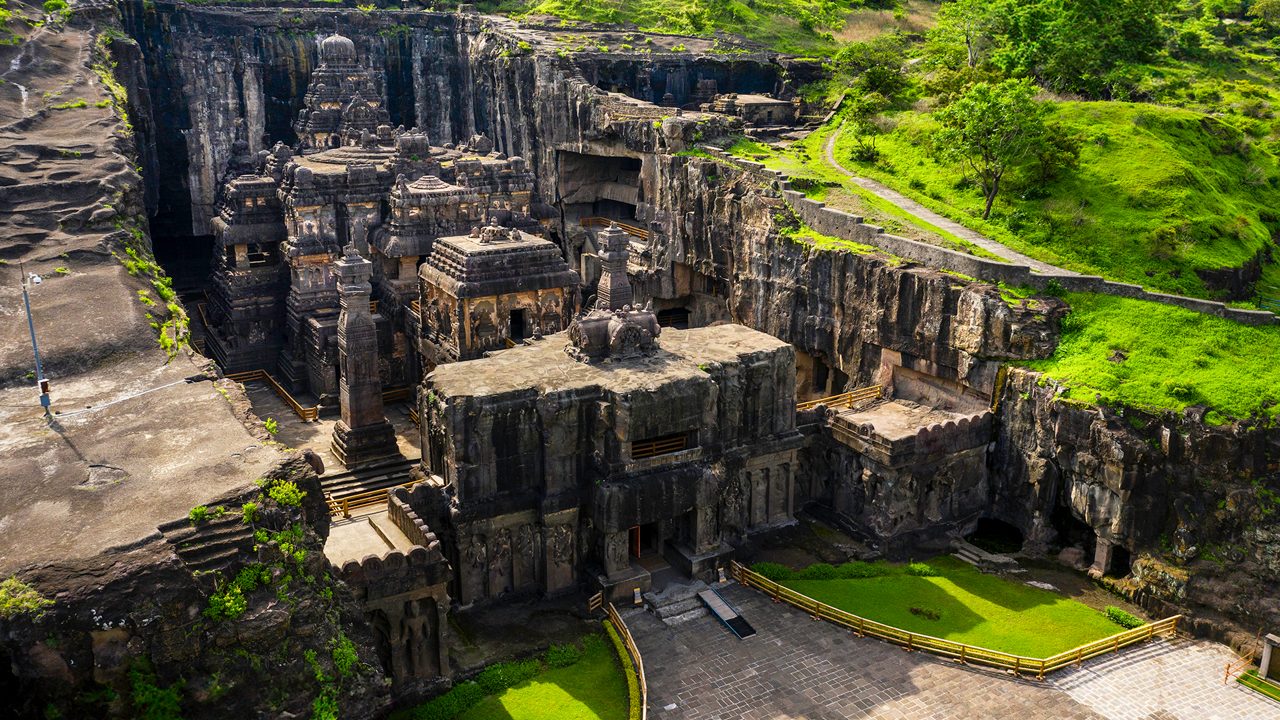
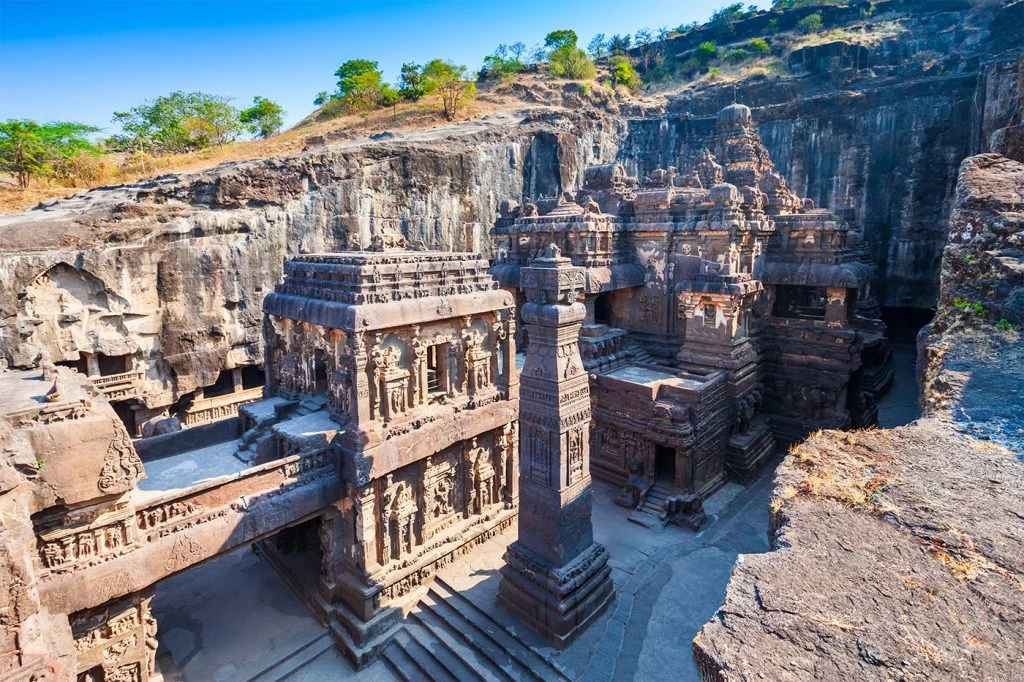
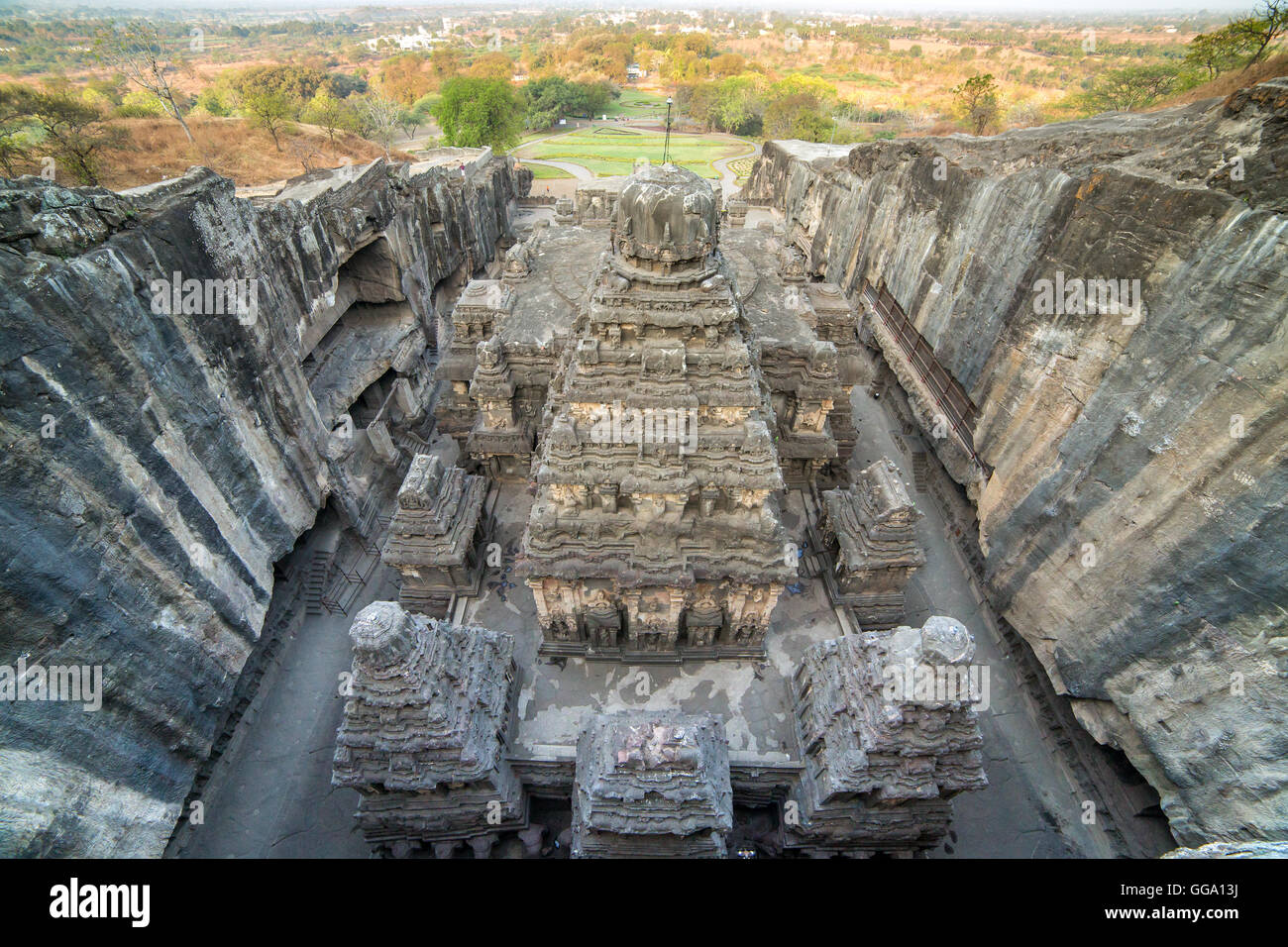
Carved from a single mass of basalt rock, this Cave 16 monument stands roughly 33 meters high and 50 meters long, and took an estimated 150 years to complete under Rashtrakuta patronage. It remains the largest monolithic rock-cut structure in the world, dedicated to Shiva.

Cave 10 Vishvakarma Chaitya

Cave 10 Vishvakarma Chaitya

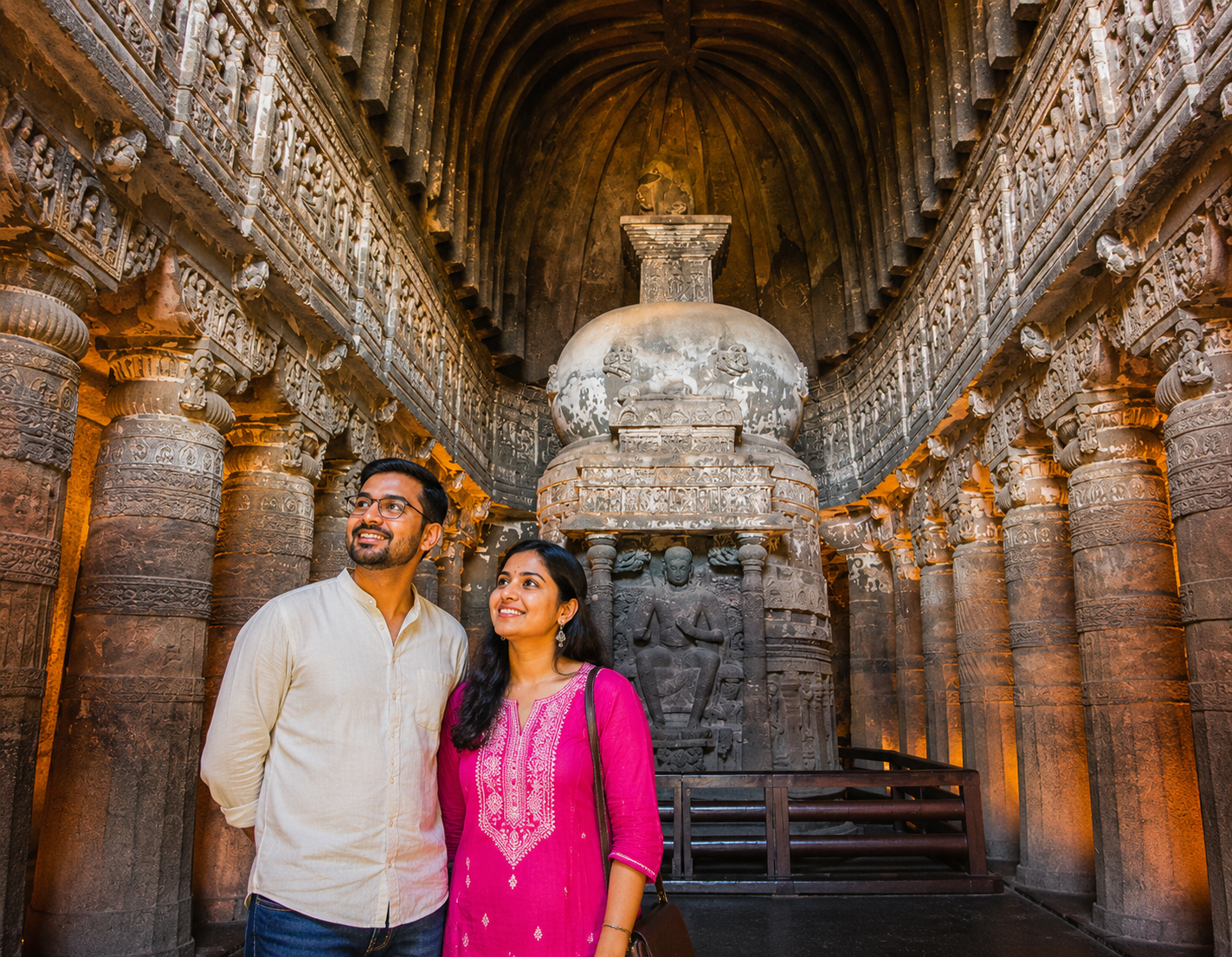
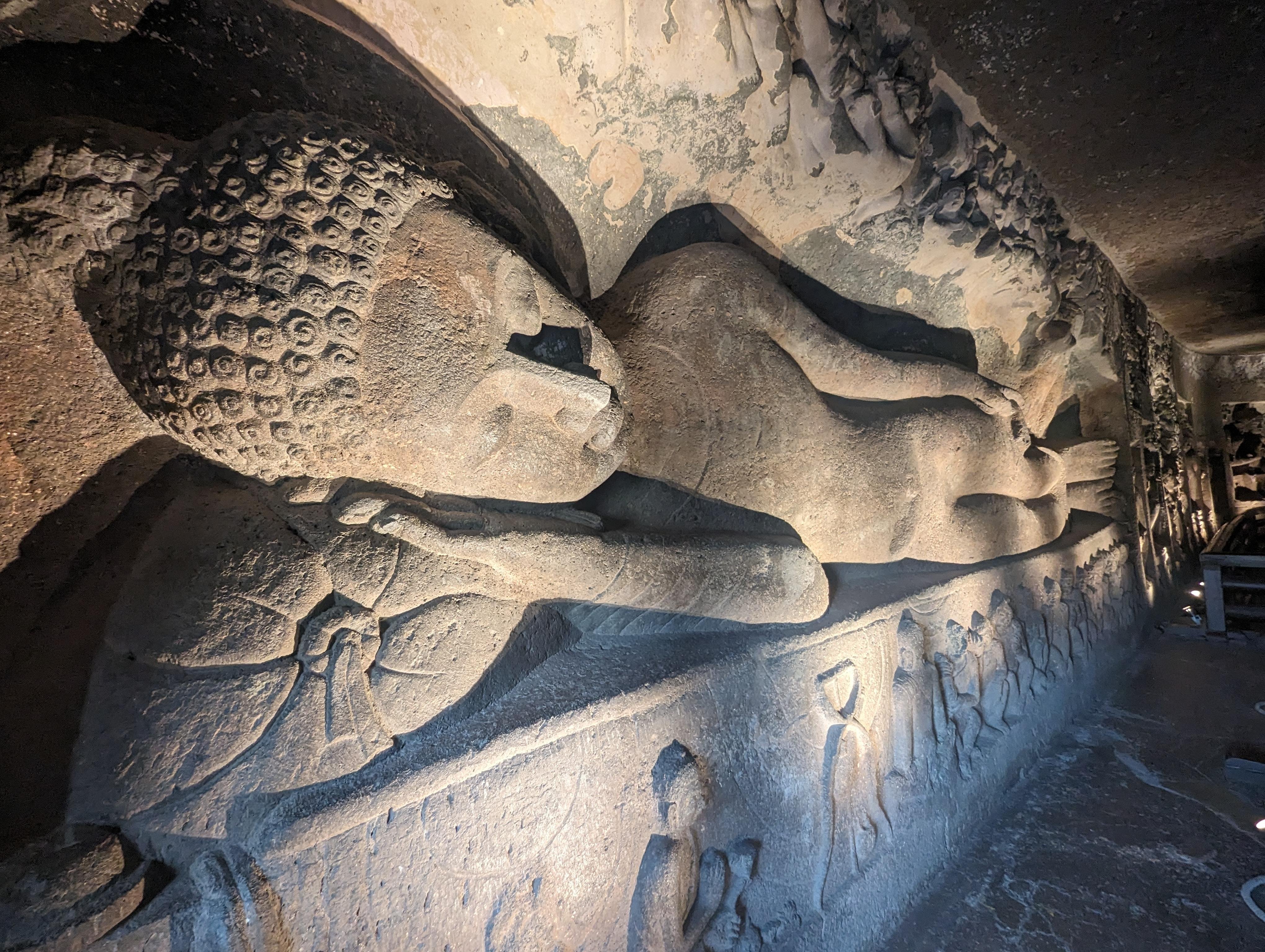
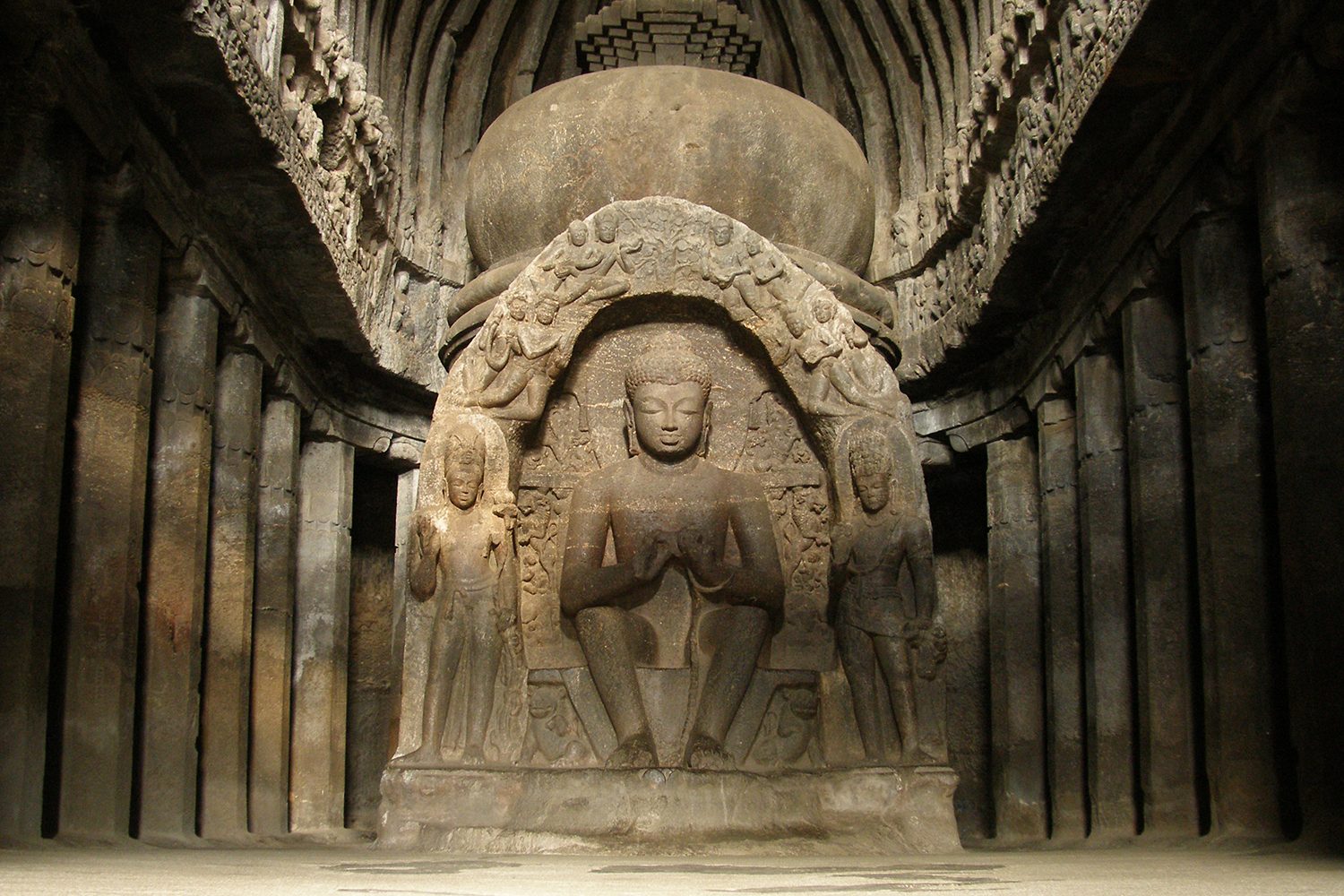
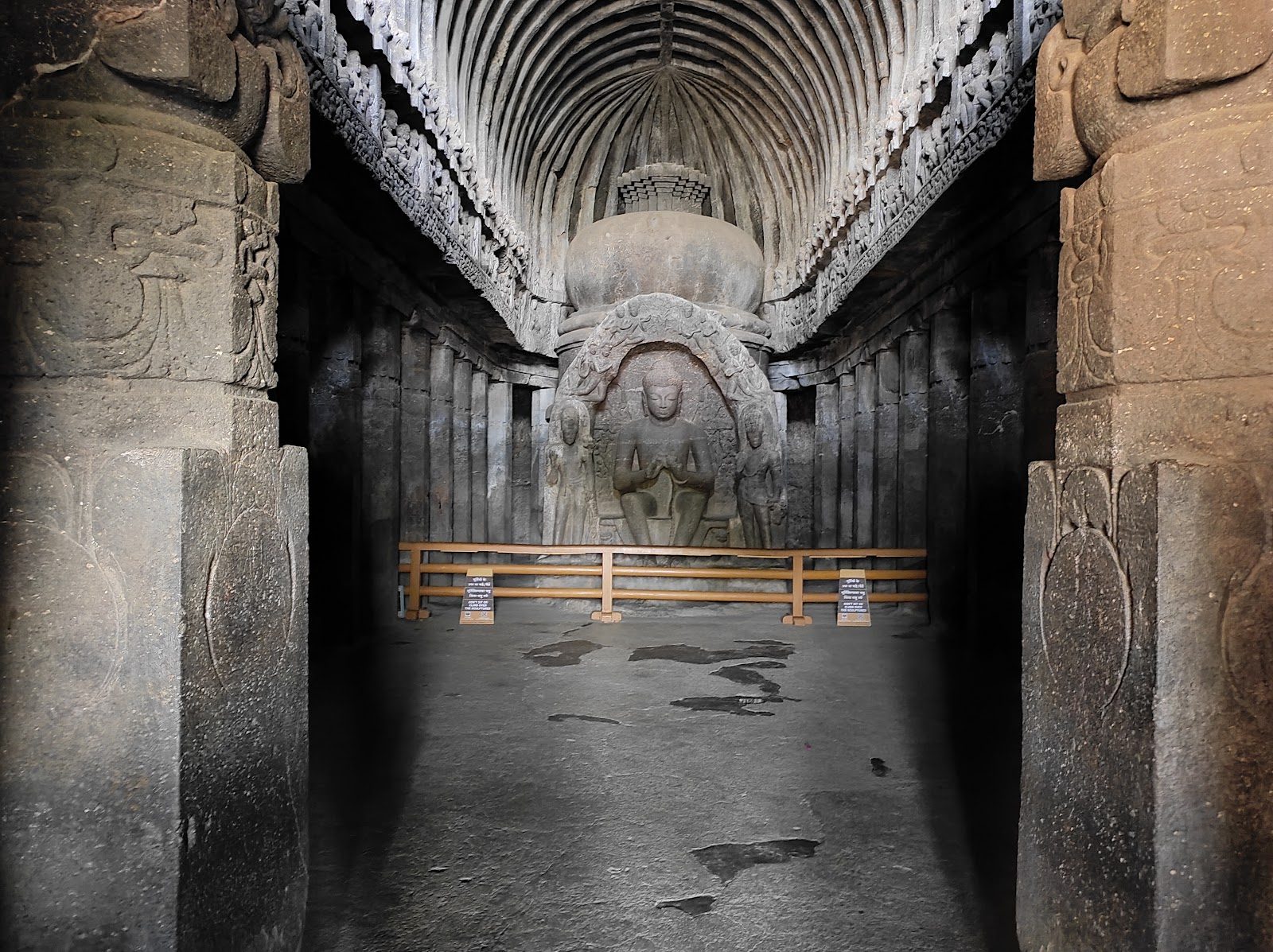
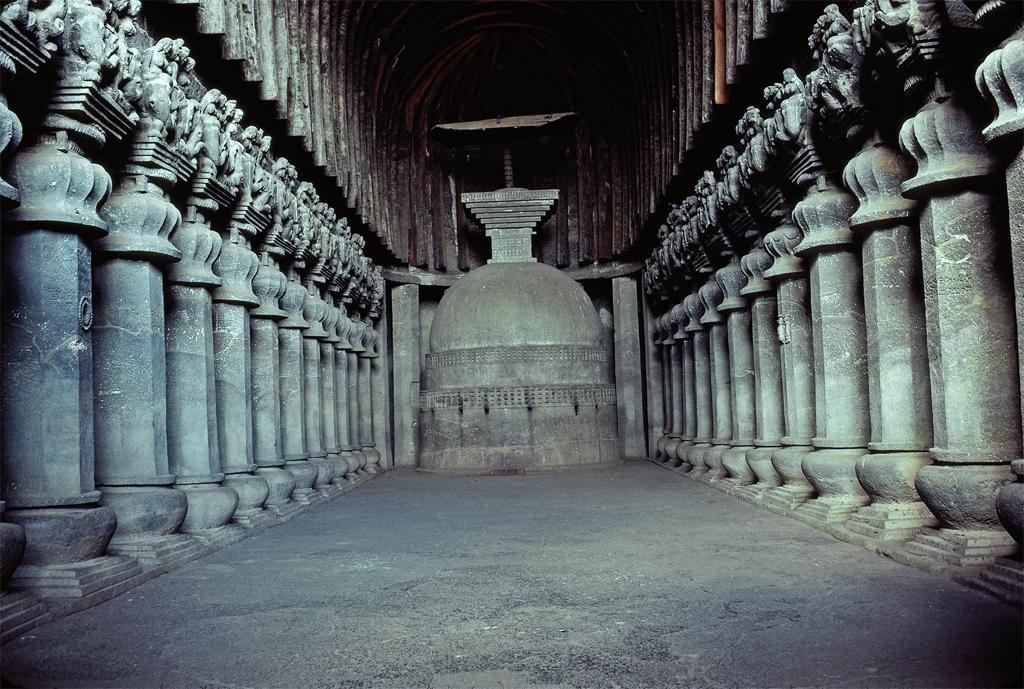
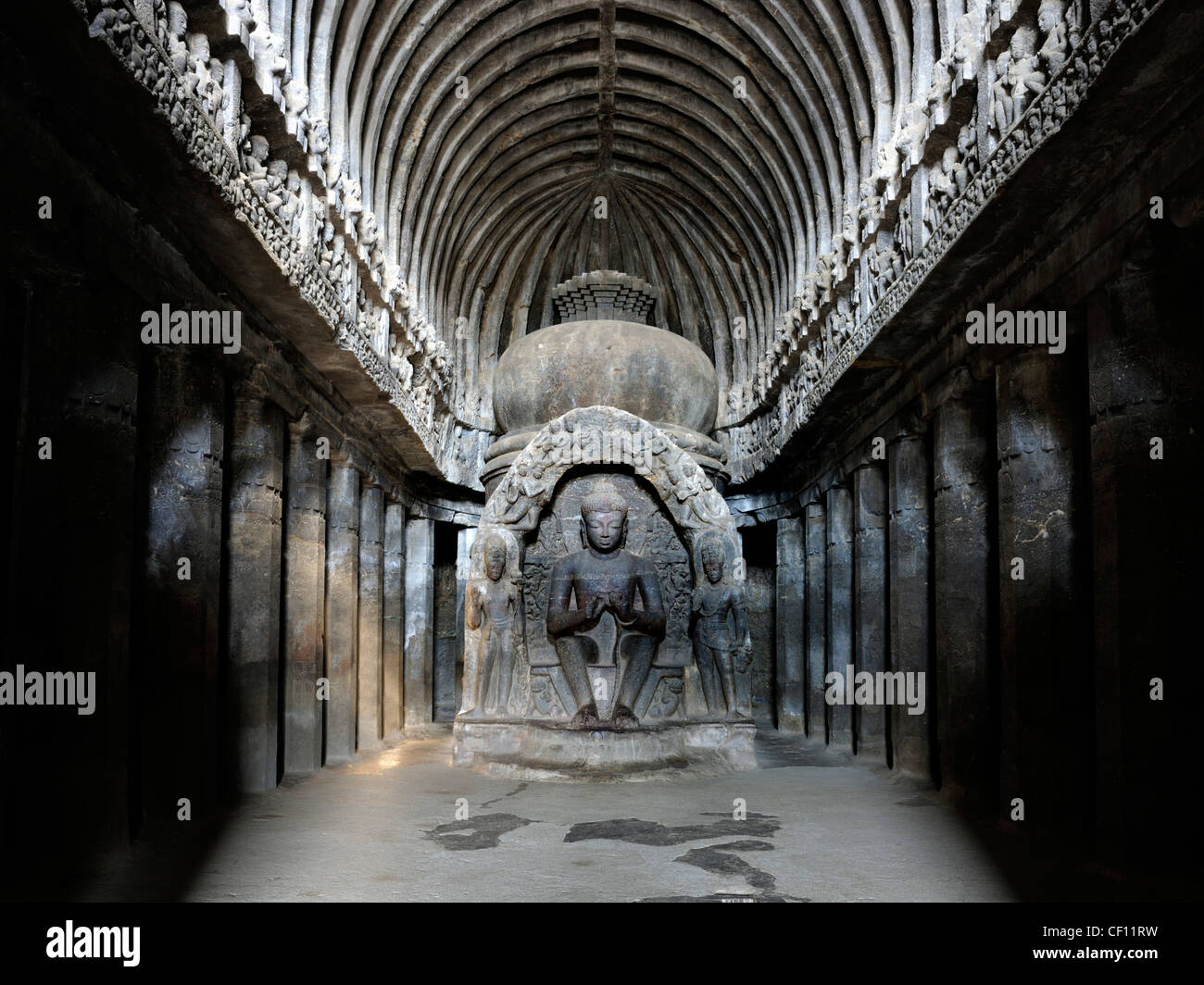
Known as the carpenter's cave, this Buddhist chaitya hall features a horseshoe-shaped window and a ribbed ceiling carved to imitate wooden beams despite being solid stone. A seated Buddha figure faces a rock-cut stupa at its rear.

Cave 12 Tin Thal

Cave 12 Tin Thal

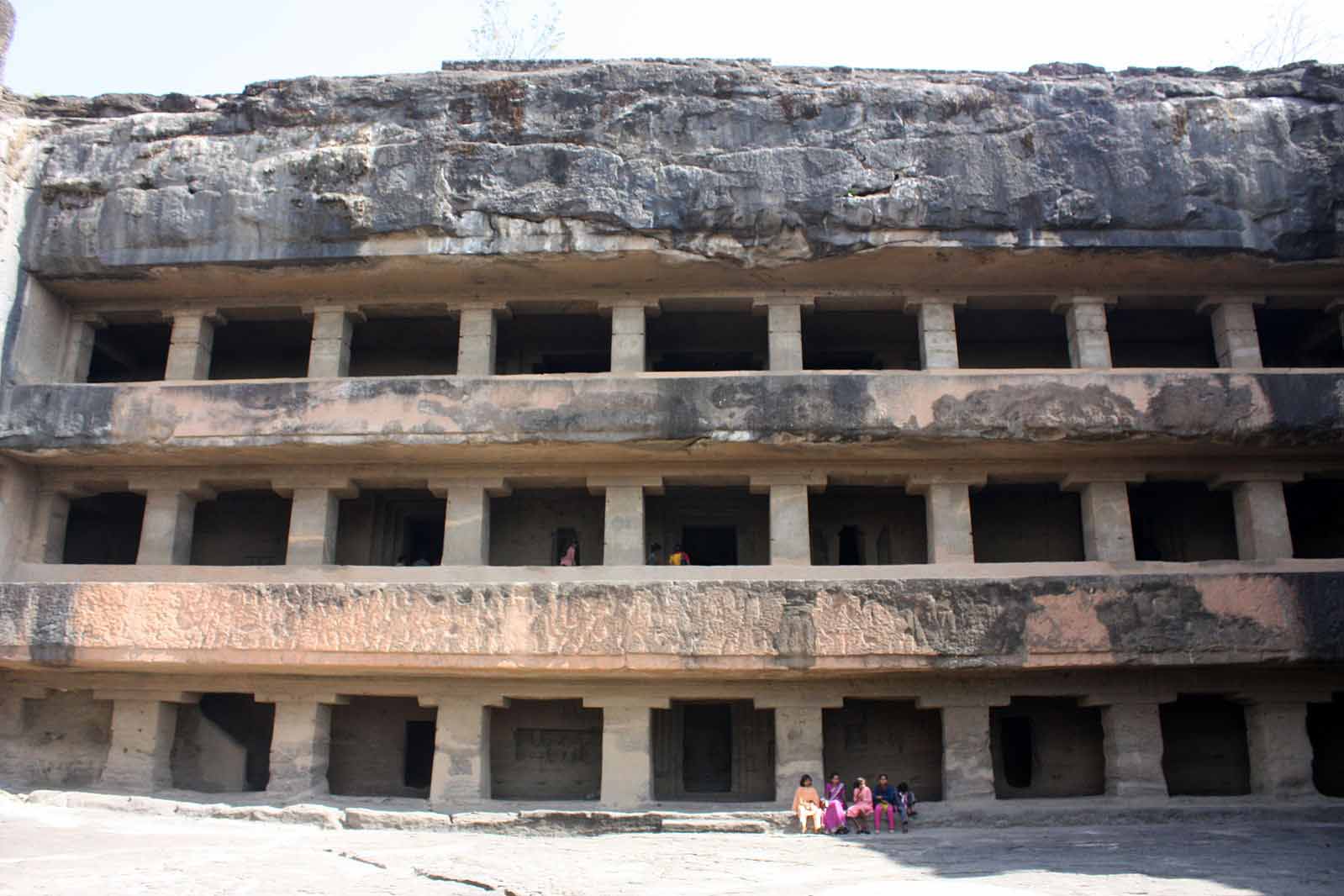
A three-story Buddhist monastery cave containing rows of meditating Buddha sculptures across its upper galleries. Its scale reflects the shift toward Vajrayana Buddhist practice in the later excavation period.

Cave 32 Indra Sabha

Cave 32 Indra Sabha

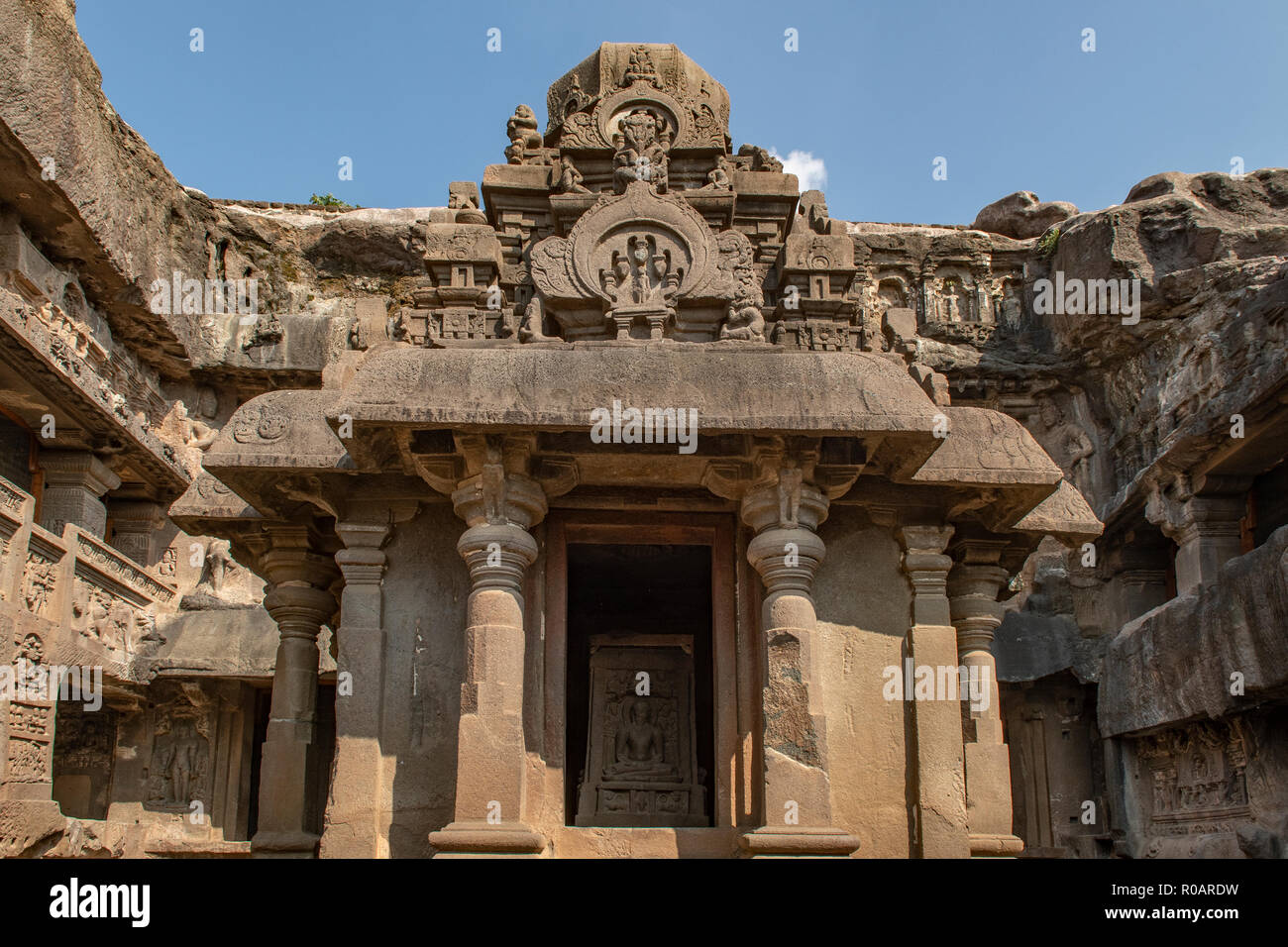
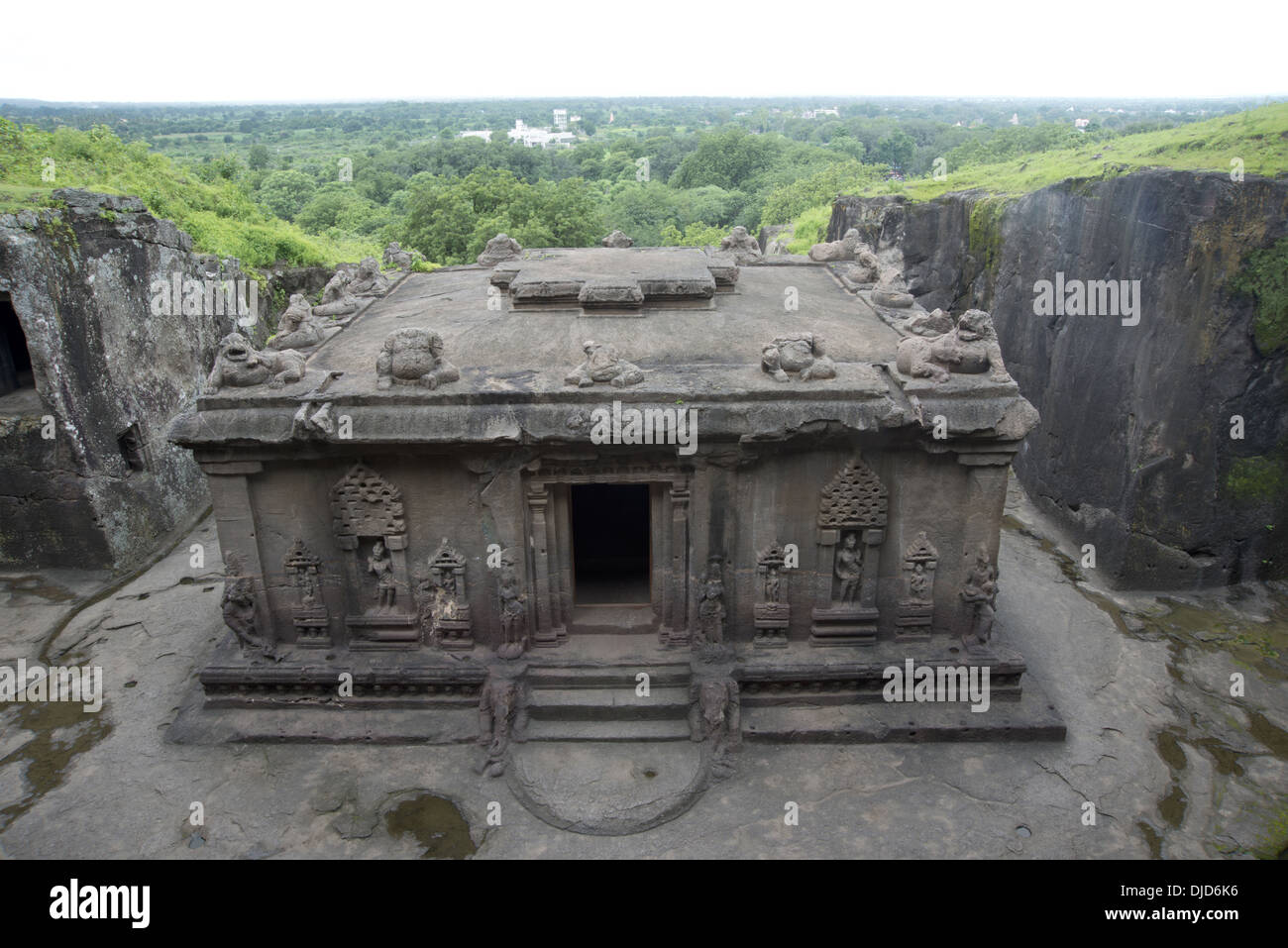
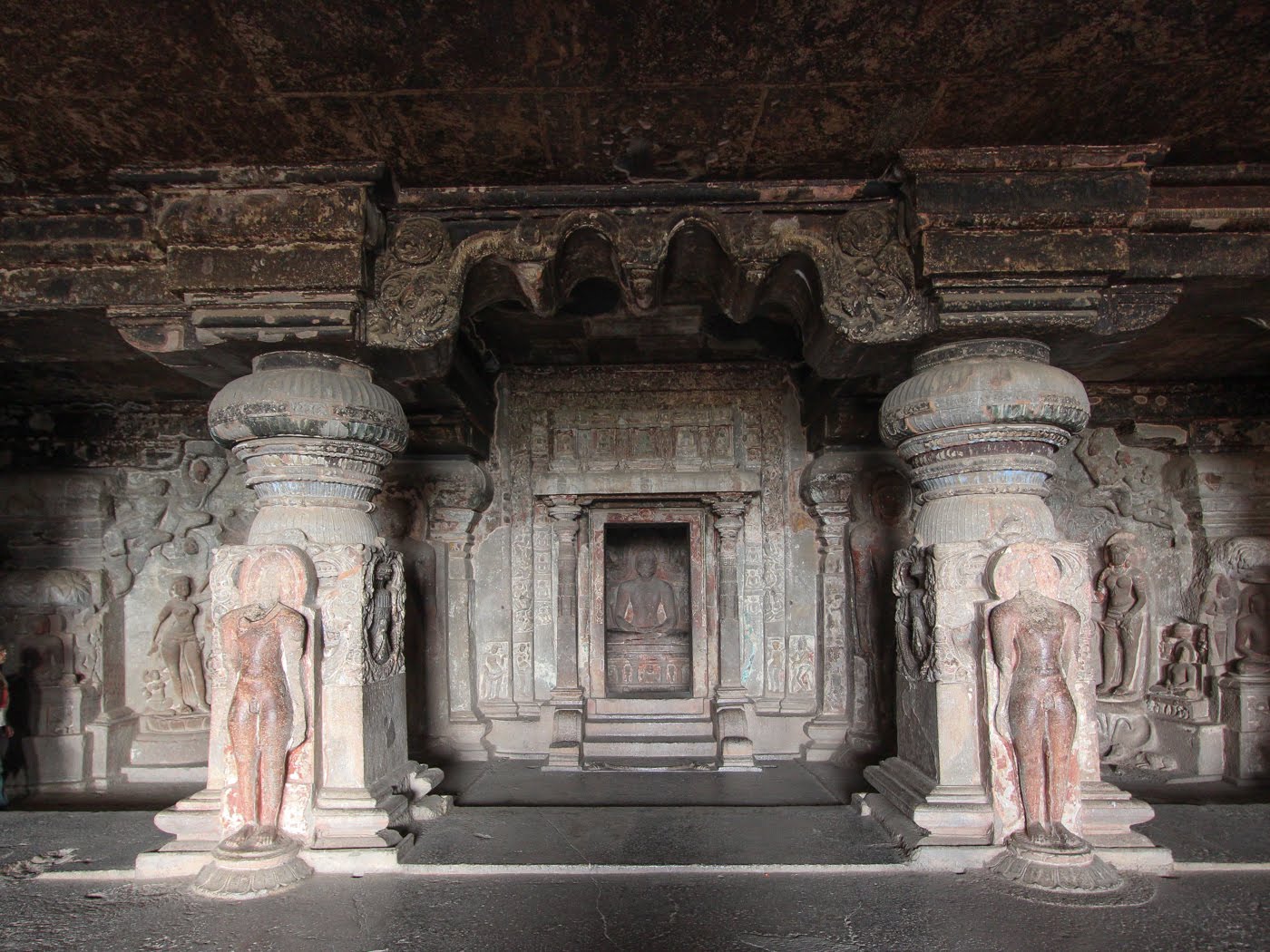
The most elaborate of the Jain caves, this two-story structure features a monolithic shrine in its courtyard and detailed carvings of Jain tirthankaras. Traces of original paint remain visible on parts of the ceiling.

Ravana ki Khai

Ravana ki Khai

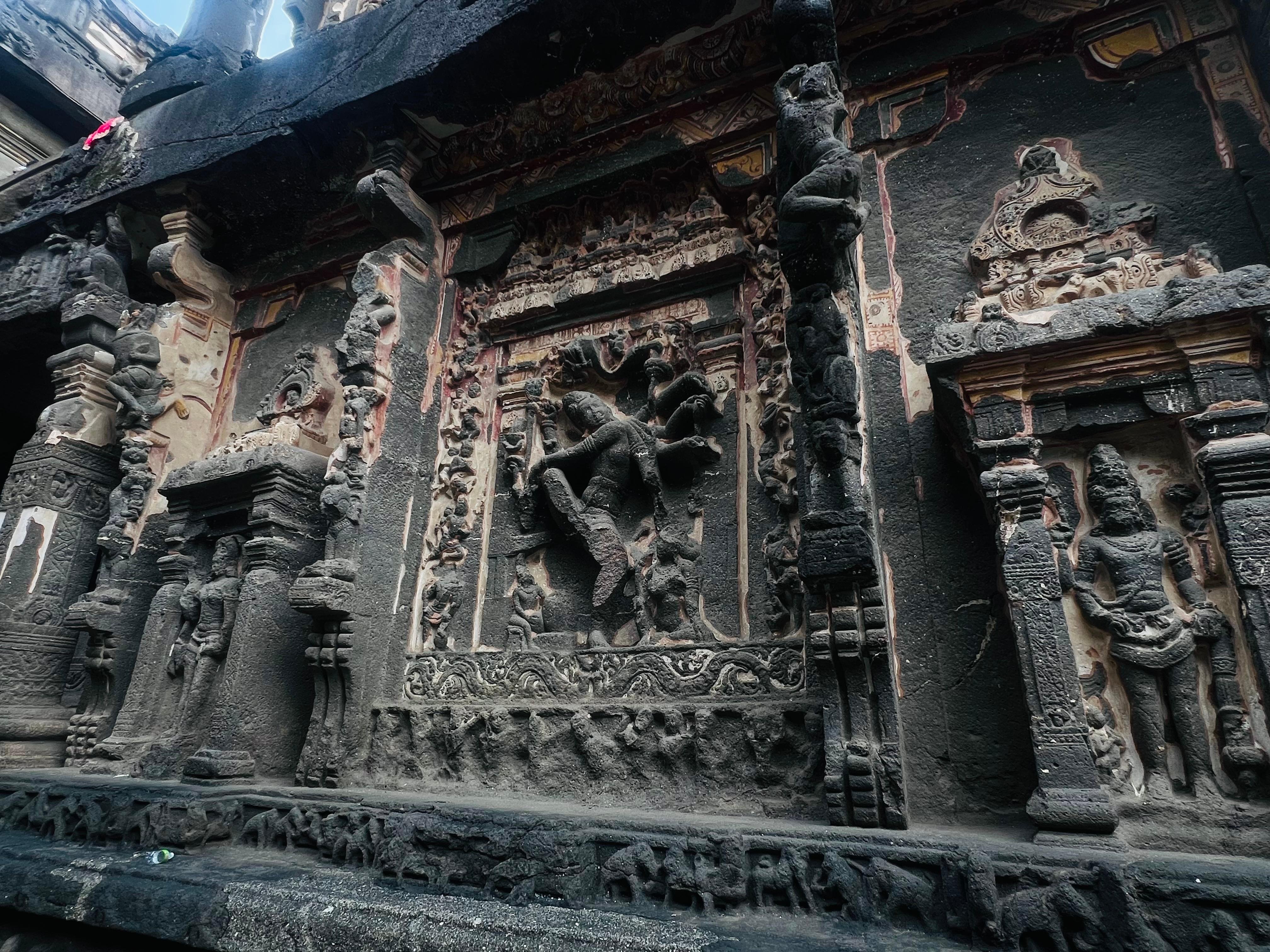
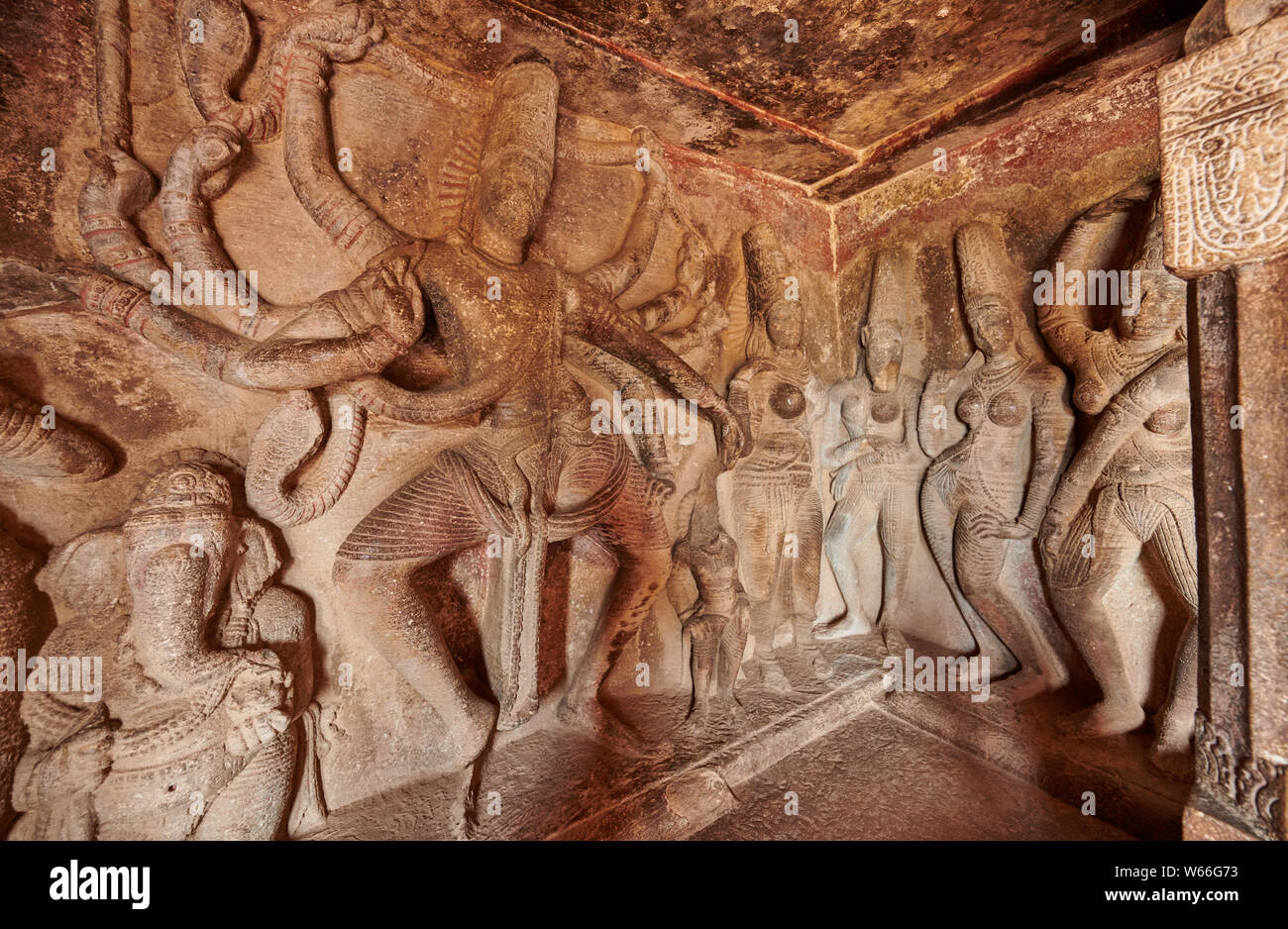
Part of the Hindu cave group, this cave depicts dynamic reliefs including a scene of Ravana attempting to shake Mount Kailasa, rendered in dramatic high relief across the rock wall.

Dashavatara Cave

Dashavatara Cave

Cave 15 illustrates the ten avatars of Vishnu across a series of sculpted panels and includes an inscription linking it to an 8th-century Rashtrakuta king, offering rare epigraphic dating evidence for the site.

The experience

What visiting Ellora Caves is really like

You arrive through the main gate at Charanandari Hills and turn first toward Cave 16, because the Kailasa Temple sets the scale for everything after. You descend a short path and the courtyard opens below the rockline, the temple rising in the pit around you rather than above you.

Read more Show less

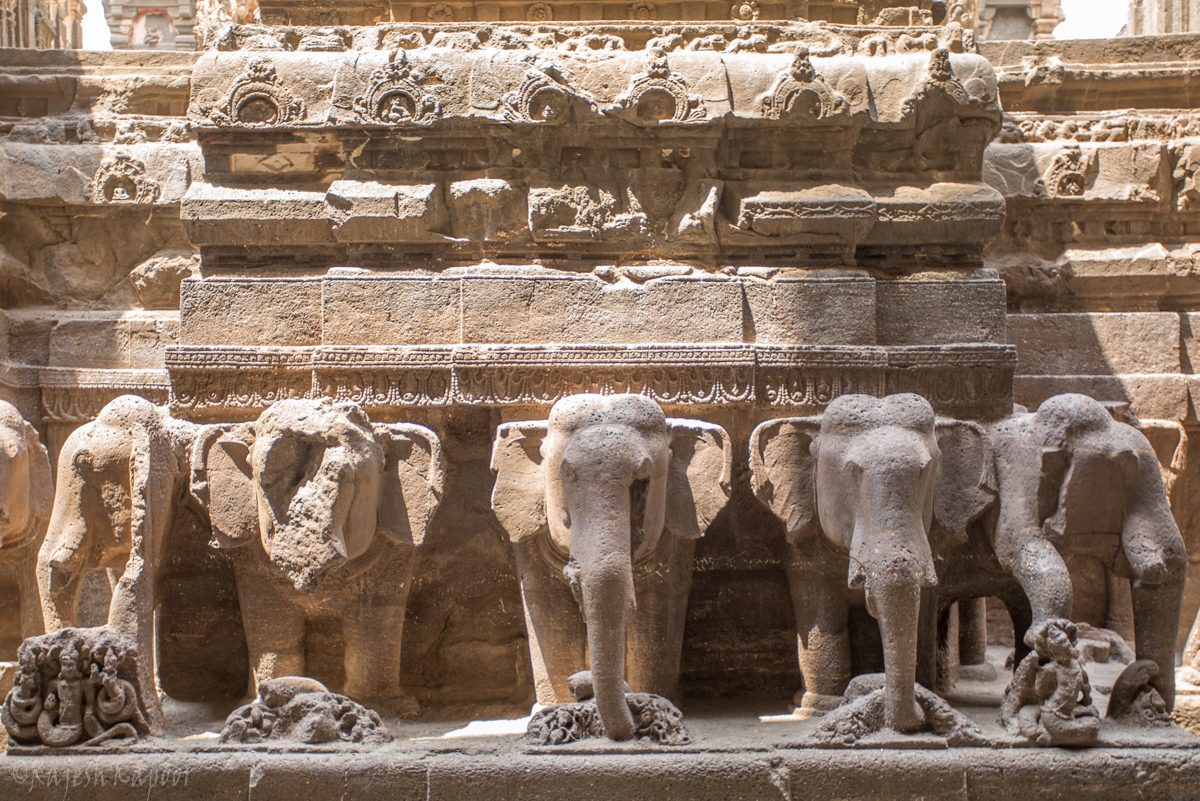
You walk the perimeter, tracing elephants carved at the base as though they carry the whole structure on their backs.

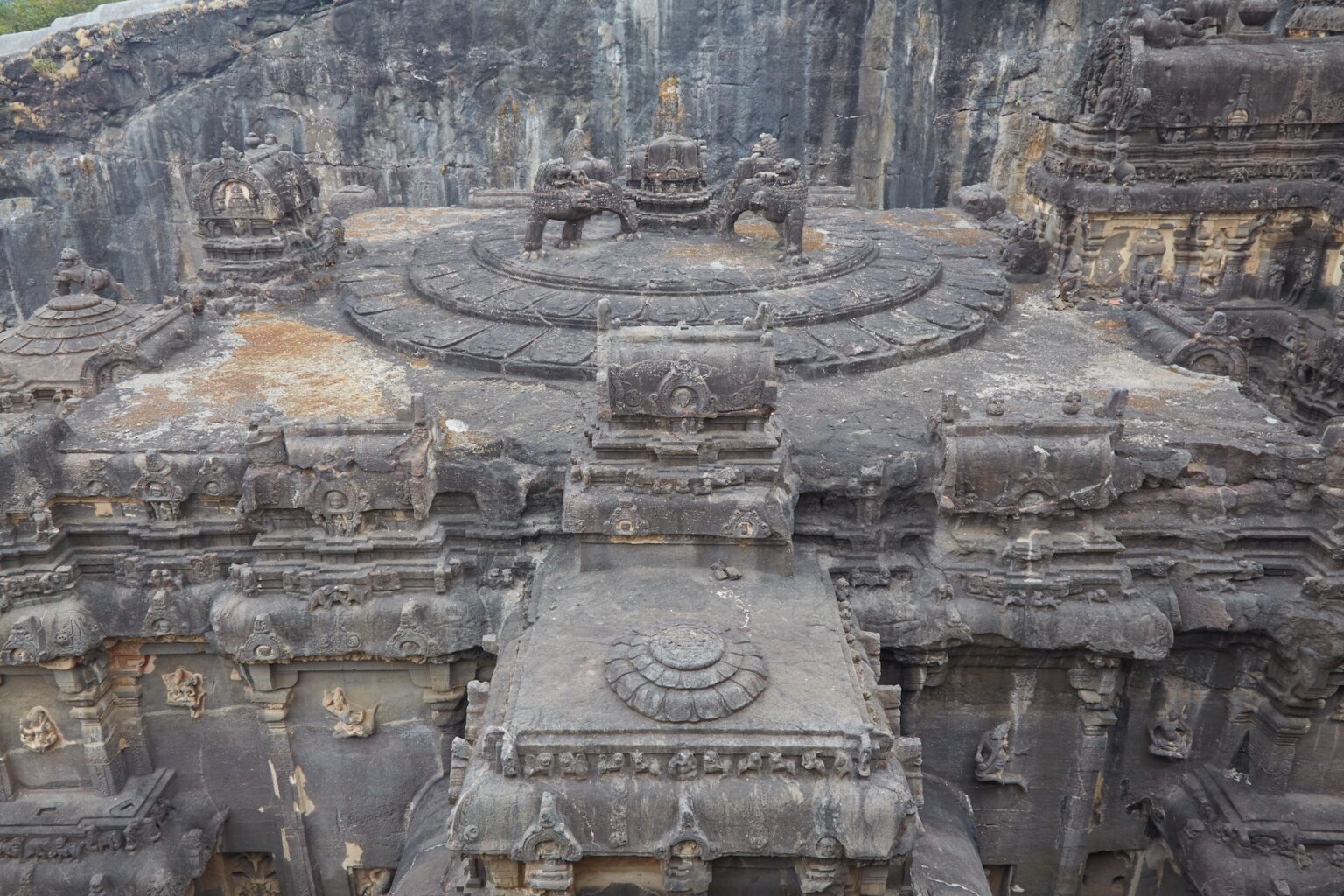
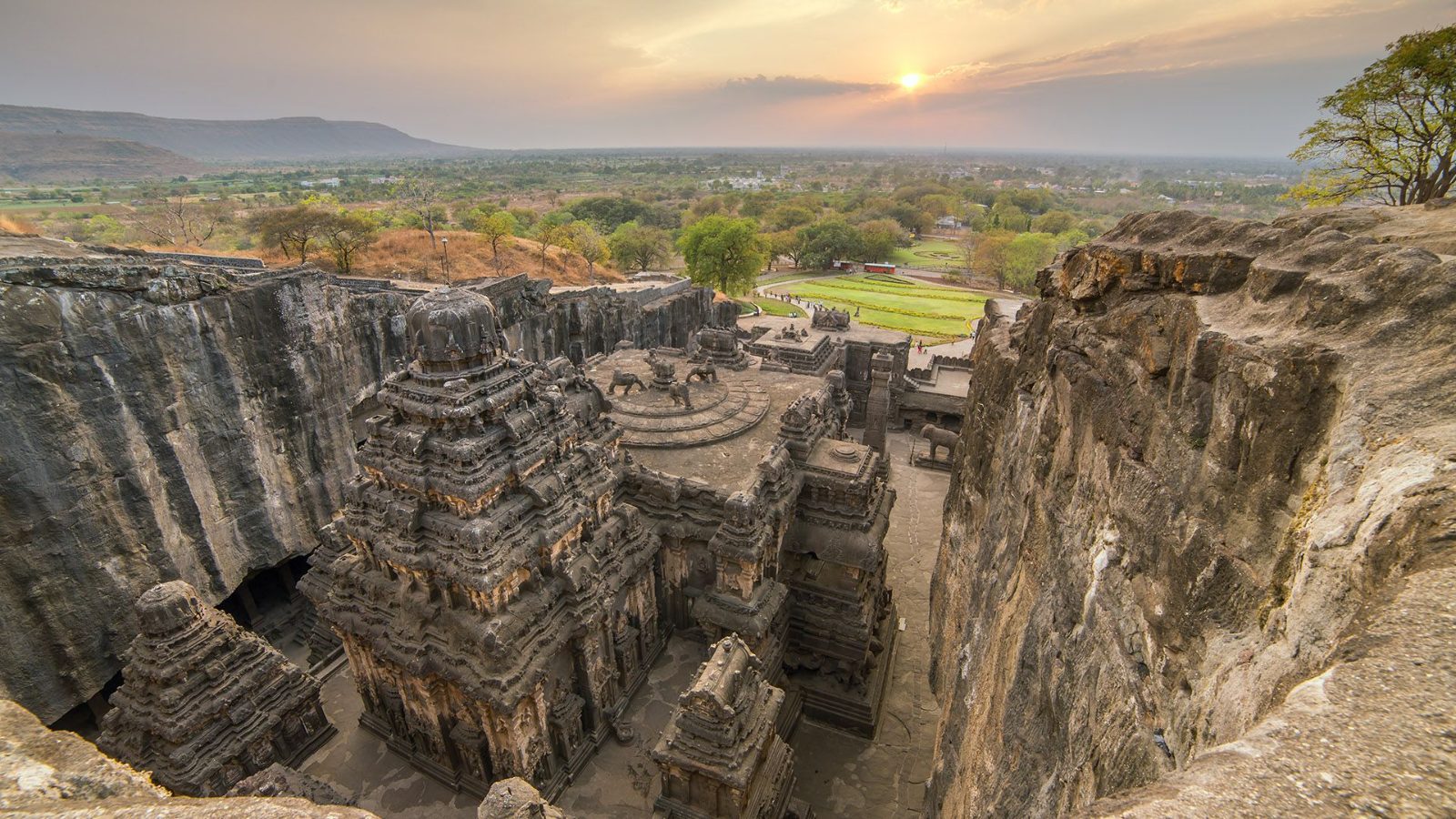
You climb the side stairs to the upper gallery and look down across the roof of the shrine, where the plan reveals itself all at once. You cross to the pillared verandahs, running a hand near friezes without touching, following a Ramayana panel from one figure to the next.

From Cave 16 you move south toward the Buddhist group. You step into the Vishvakarma cave, where the ribbed ceiling curves overhead and a seated Buddha waits at the far end in cool shade. You pause, letting your eyes adjust after the courtyard glare.

Later you walk the northern ridge to the Jain caves, quieter and finer, their lotus ceilings drawing your gaze upward. Your Ellora Caves Tickets carry you across all three faiths in one unbroken line of stone.

Ellora Caves Tickets
Everything You Need to Know

Your complete Ellora Caves guide

All the details about your upcoming adventure in one place

Exploring Ellora Caves Tickets and Rock Temples

Carved into a basalt escarpment, the 34 Buddhist, Hindu, and Jain rock-cut monuments at this UNESCO World Heritage Site center on the monolithic Kailasa Temple, a single-stone marvel dedicated to Shiva. Ellora Caves Tickets grant entry to this Archaeological Survey of India monument set in the Charanandri hills. Ellora Caves Tickets tours pair the sanctuaries with the nearby Grishneshwar Jyotirlinga, making a natural introduction to the region's Aurangabad landmarks.

The Kailasa Temple was carved from the top down, quarried out of a single basalt cliff by workers who removed an estimated 200,000 tonnes of rock without a foundation stone ever being laid. This is Cave 16, the centrepiece of Ellora, and it remains the largest monolithic rock-cut structure on earth.

Ellora Caves Tickets grant passage to a site where excavation, not construction, produced a temple the size of a cathedral.

The thirty-four caves spread across the Charanandari Hills belong to three faiths and several centuries. Buddhist monasteries and prayer halls, cut between roughly the sixth and eighth centuries, occupy the southern end. Hindu shrines rise through the middle, and Jain sanctuaries close the northern stretch. Their overlap along one escarpment is unusual: three religious traditions worked the same rock in sequence, each leaving chapels, colonnades, and sanctums hewn into living stone. The site was inscribed as a UNESCO World Heritage property in 1983, recognised for both its artistic reach and its record of coexistence.

What draws visitors today is not only scale but the precision of the carving. The Kailasa complex was conceived as a representation of Mount Kailash, the mythic abode of Shiva, and its sculptors rendered elephants, river goddesses, and full narrative friezes from the Ramayana into the walls of a courtyard sunk deep below the surrounding rockline. Pillared verandahs, freestanding shrines, and a two-storey gateway were all released from the same continuous mass. Traces of the plaster and pigment that once brightened these surfaces survive in sheltered corners.

The Buddhist caves offer a quieter register. The Vishvakarma cave, sometimes called the Carpenter's Cave, arches its ceiling into ribs that imitate timber beams, a stone echo of wooden halls long vanished. Deeper monasteries hold meditation cells and seated Buddha figures worn smooth by time. The Jain group, smaller and more intricate, carries some of the finest detail on the ridge, its ceilings latticed with lotus medallions.

Managed by the Archaeological Survey of India, the caves sit near Aurangabad in the Chhatrapati Sambhajinagar district of Maharashtra, a short drive from the regional airport and rail links. For travellers weighing Ellora Caves tours across a longer itinerary of Maharashtra landmarks, the site anchors a route through the Deccan's rock-cut heritage. A skip-the-line Ellora Caves entry keeps the focus where it belongs, on the chisel marks still legible across basalt walls that have held their shape for more than twelve hundred years. Few monuments reward slow looking as fully as this one, and Ellora Caves Tickets open the whole ridge.


Carved from the top down, the Kailasa Temple was released from a single cliff without a foundation stone ever being laid.

Dress code

Modest, breathable clothing is recommended for Ellora Caves Tickets holders since several caves are still active shrines with steps and uneven basalt floors. Closed, sturdy walking shoes are advised over sandals, as cave interiors can be dim, damp, and slippery near carved thresholds.

Bags & security

Visitors pass through a security check near the main ticket gate before entering the Charanandari Hills complex, and bags may be inspected on entry. Large backpacks and suitcases are discouraged given the narrow rock-cut passageways between caves.

Photography

Personal still photography is generally permitted throughout the cave complex, including inside the Kailasa Temple courtyard, but tripods and commercial filming require separate ASI permission. Flash photography is discouraged near painted ceilings and carved reliefs to protect fragile pigment and stone surfaces.

Families & strollers

Children under 15 enter free, and the open courtyard around the Kailasa Temple gives families room to spread out between cave visits. Steep, unguarded ledges near some upper galleries call for close supervision of young children.

Accessibility

The site's rock-cut terrain includes uneven stone steps, sloped courtyards, and narrow cave entrances that make wheelchair access difficult in most sections. Ground-level caves near the Kailasa Temple forecourt are the most navigable for visitors with limited mobility, though assistance is recommended.

Food & drink

No food stalls or cafés operate inside the fenced cave complex itself, so snacks and food are typically consumed at the parking-area stalls before or after entry. Bottled water is sold near the ticket counter, and carrying your own water is recommended given the exposed walking route between caves.

Not allowed

× Tripods without permit × Drones × Large backpacks × Sharp objects × Food inside cave interiors × Spray paint or markers × Flammable liquids × Loudspeakers × Alcohol × Firearms × Chewing tobacco and paan × Plastic bags for littering

What to bring

✓ Government-issued photo ID ✓ Printed or digital e-ticket ✓ Bottled water ✓ Hat or scarf for sun ✓ Comfortable walking shoes ✓ Small flashlight for dim interiors

Opening hours

Mon 09:00 – 17:30
Tue Closed

Weekly closure day

Wed 09:00 – 17:30
Thu 09:00 – 17:30
Fri 09:00 – 17:30
Sat 09:00 – 17:30

Busier than weekdays

Sun 09:00 – 17:30

Busier than weekdays

How to get there

Closures & exceptions

  • ·Every Tuesday — Weekly closure

At a glance

Hours

09:00–17:30, closed Tuesdays;location

Opening hours

09:00 – 17:30

Getting there

City-center access via metro and bus

Accessibility

Most experiences are wheelchair-friendly — check individual tours

What to bring

Comfortable shoes, water, phone for mobile voucher

Getting there

Car · 30-40 min · Moderate

Self-drive or hired car from Aurangabad city takes roughly 30-40 minutes via the Ellora road, with parking available a short walk from the main gate.

Public transport · 45-60 min · Low

MTDC and state transport buses run from Aurangabad's central bus stand toward Ellora village, dropping visitors near the ticket gate.

Taxi · 30-45 min · Moderate to high

Pre-booked taxis or app-based cabs from Aurangabad Airport or the railway station reach the site directly.

Cancellation policy

Ellora Caves Tickets booked through the ASI portal are non-transferable and non-refundable once issued, and e-ticket cancellations are not permitted after purchase. The 600 INR foreign-visitor entrance fee is charged per person at the time of booking and is not reversible for no-shows or date changes.

Plan your time

How Long Do You Need for Ellora Caves Tickets?

Recommended time

Half a day (3-5 hours)

A focused loop through Kailasa Temple plus the main Hindu, Buddhist, and Jain caves takes roughly 3 to 4 hours, while a full day lets you cover all three groups without rushing between them. Add an hour if you're travelling with a guide or want to linger over carvings; trim to 2-3 hours if you're only after the Kailasa Temple highlights. Booking Ellora Caves Tickets online in advance helps you skip the counter queue, which lengthens noticeably once tour buses arrive mid-morning. Within the 09:00-17:30 opening hours, the gap right after opening stays genuinely walkable before groups converge on Cave 16.

Crowd levels through the day

Opening rush Light
Prime window (09:00-11:00) Building
Late morning peak Heavy
Midday lull Moderate
Afternoon (Jain caves) Moderate
Closing hour Light
Plan ahead

Best time to visit Ellora Caves

Weather · crowds · average price — dots go green to amber to red as each metric rises.

Winter (Nov-Feb)

Daytime temperatures stay near 15-25°C, making this the most comfortable season for walking the full cave circuit. Crowds build around the Christmas-New Year period and the December Ellora-Ajanta arts festival.;Monsoon (Jul-Sep)

Insider tips

Helpful tips for visiting Ellora Caves

Buy tickets online first

Booking Ellora Caves Tickets through the ASI portal at asi.payumoney.com in advance avoids queues at the counter, especially on weekends and holidays.;Carry small cash

Where to meet

Ellora Caves meeting points

Main ticket gate

Main ticket gate

Ellora Caves, Charanandari Hills, Ellora, near Aurangabad, Maharashtra 431102

Primary entry point and ticket validation counter for all visitors

Get directions
The story

The History Behind Ellora Caves Tickets: Five Centuries of Rock-Cut Faith

The story that anchors Ellora Caves Tickets begins in rock, not architecture. Around the 6th century, Buddhist monks carved the earliest excavations, Caves 1 through 12, into the basalt scarp of the Charanandari Hills. These viharas and chaityas served as monastic dwellings and prayer halls. The double-storeyed Do Thal and triple-storeyed Tin Thal reflect a maturing monastic ambition. Sculptors worked downward from the cliff top, removing stone rather than assembling it. From roughly the 7th century, Hindu patronage overtook Buddhist activity. The Rashtrakuta dynasty transformed the site. Under King Krishna I, around 756 to 773 CE, artisans began Cave 16, the Kailasa Temple, hewn as a single monolith dedicated to Shiva. Workers cut away an estimated volume of basalt to free the shrine from the living hillside. The temple's Dravidian towers, elephant friezes, and depiction of Ravana shaking Mount Kailasa mark the peak of the Ellora Caves tour tradition. No mortar joined its walls; every chamber was subtraction. Between the 9th and 11th centuries, Jain patrons carved the final cluster, Caves 30 through 34, including the Indra Sabha. Their restrained interiors and Tirthankara reliefs closed five centuries of continuous rock-cut faith. Purchasing Ellora Caves Tickets today grants passage across all three religious phases within a single scarp, a rare survival of coexistence. The Archaeological Survey of India now maintains the ensemble, which UNESCO inscribed as World Heritage in 1983. Controversy and near-loss shadowed the site. Medieval accounts describe iconoclastic damage during the Delhi Sultanate's reach into the Deccan. Colonial-era travellers, including the 1794 account attributed to visiting officers, recorded neglect before formal conservation. Modern Ellora Caves Tickets tours draw visitors to the same monolith that once risked erosion and vandalism. Booking these Ellora Caves Tickets tickets funds the ongoing preservation of the Aurangabad landmarks. For those planning an Ellora Caves Tickets tour, the layered chronology of Buddhist restraint, Rashtrakuta grandeur, and Jain austerity remains legible in the stone itself, a monument to devotion carved rather than built.

6th c.

Buddhist monks carve the earliest viharas and chaityas, Caves 1 through 12, into the basalt scarp.

7th c.

Hindu patronage rises as artisans begin excavating temples dedicated to Shiva and Vishnu.

756–773 CE

Rashtrakuta king Krishna I commissions Cave 16, the monolithic Kailasa Temple, cut from a single rock mass.

9th–11th c.

Jain patrons carve the final cluster, Caves 30 through 34, including the Indra Sabha.

1794

Colonial-era officers record the neglected condition of the caves in an early published account.

1983

UNESCO inscribes Ellora as a World Heritage Site under Archaeological Survey of India stewardship.

Photo spots

Best Photo Spots for Your Ellora Caves Tickets Visit

Cave 16 Kailasa Temple Courtyard

Cave 16 Kailasa Temple Courtyard

Best light · Before 09:00, soft frontal light

Stand at ground level facing the rock-cut Nandi Mandapa for the frontal view of the monolithic shikhara rising above the elephant-carved plinth, the classic Ellora Caves Tickets shot. The two Dhwajasthambhas (flagstaff pillars) frame the composition on either side of the courtyard. Wide-angle lenses handle the scale better than standard zoom.

Cave 16A Overlook

Cave 16A Overlook

Best light · Mid-morning, avoid midday glare

A raised vantage above the main courtyard, reached via the path along the rock face, gives the elevated angle onto the temple's rooftop shikhara and the full plan of the excavated pit below. This is the overhead perspective seen in most aerial-style photographs of Kailasa Temple. Footing on the rock ledge is uneven, so move carefully near the edge.

Cave 10 Vishvakarma Chaitya Interior

Cave 10 Vishvakarma Chaitya Interior

Best light · Late morning, natural light through facade window

Inside the apsidal chaitya hall, position centrally between the octagonal pillar rows to frame the 15-foot seated Buddha carved against the tall votive stupa at the rear. The carved ceiling ribs mimicking wooden beams read clearly in a vertical shot from the nave. Interior light is dim, so a tripod or high ISO helps.

Cave 32 Indra Sabha Upper Storey

Cave 32 Indra Sabha Upper Storey

Best light · Morning, fewer visitors

Climb to the upper level of this double-storeyed Jain shrine to photograph the intricately carved pillars, the monolithic manastambha, and the seated Tirthankara figures facing the courtyard elephant statue. The carved lotus ceiling rewards a straight-up frame from directly beneath it.

Gallery

Moments from Ellora Caves

With kids

Visiting Ellora Caves Tickets With Kids and Elders

Booking Ellora Caves Tickets works for families, but the terrain does the real deciding: uneven rock-cut steps, sloped courtyards, and roughly 2km of walking between clusters mean the day goes best with a plan, not just a ticket.

Strollers

Prams roll across the flatter courtyards near Cave 16 (Kailasa Temple) but struggle on the rough steps into the smaller viharas, so plan to carry younger toddlers through those sections.

Best ages

Kids from about 6 and up manage the walking and steps comfortably, while grandparents or those with limited mobility should stick to the ground-level halls rather than climbing to upper galleries.

Pacing

Tackle the Buddhist caves 1-12 first since their floors are the flattest and most level of the whole stretch, saving energy for the steeper Kailasa Temple approach later in an Ellora Caves Tickets tour.

Facilities

Wheelchairs can be arranged informally with porters near the entrance, and shaded rest points appear along the main pathway, though there is no dedicated pram-parking or baby-change room on site.

Rainy-day plan

Monsoon showers make the rock-cut steps slick, so families should budget extra time and stick to the covered, lower-level Buddhist caves rather than the open Kailasa courtyard.

Customer Reviews

What travelers say about Ellora Caves

Real experiences from real travelers

4.5
Based on 2400 reviews
1 ★ 520
2 ★ 640
3 ★ 1150
4 ★ 4100
5 ★ 16200
P
Priya M.
India · 2026-06-14

Kailasa left me speechless

We reached by 8am to beat the summer heat and the light on the basalt was soft and orange. Buying our Ellora Caves Tickets online meant we walked straight past the counter queue, which mattered on a 40-degree day. The scale of the Kailasa monolith carved downward from a single rock is hard to process in person.

D
David R.
United States · 2026-05-02

Worth the trip from Aurangabad

Rented a car for the day and the drive was easy. The Ellora Caves Tickets tour felt smooth once we had the entry sorted, and a local guide near Cave 16 explained the Rashtrakuta carving techniques. Bring water and a hat, there is little shade in the courtyard.

Y
Yuki T.
Japan · 2026-03-19

Buddhist caves are quieter

Most crowds cluster at Kailasa so I wandered the Buddhist group first, Cave 10 with its vaulted chaitya ceiling was my favourite. Late morning light through the entrance arch hit the stupa perfectly. Our Ellora Caves Tickets tickets covered everything in one entry, no separate charges inside.

S
Sofia G.
Spain · 2026-04-27

Grand but plan for heat

The Ellora Caves are genuinely one of the great Indian rock-cut landmarks and the elephant friezes are astonishing up close. April afternoon was punishing though, so go early. Steps between the Jain caves at the far end get steep.

L
Lukas B.
Germany · 2026-02-11

Skip-the-line saved us

We arrived on a Sunday and the counter line was long, but our pre-booked skip-the-line Ellora entry got us through in minutes. Standing inside the Kailasa temple courtyard at golden hour, with the shikhara glowing, was the highlight of our Maharashtra trip. UNESCO status is well earned here.

A
Ananya K.
India · 2025-11-08

Golden hour magic

Went in early November when the weather had cooled and stayed until closing. The Ellora Caves tour let us move at our own pace across all three cave groups. The Dashavatara panels and the Kailasa gateway are unmissable.

M
Marco P.
Brazil · 2025-09-22

Massive and humbling

Spent nearly four hours and still did not see every cave. The monolithic Kailasa carving dwarfs everyone standing near it. A little more signage would help, but a guide fills the gap well.

E
Emma L.
United Kingdom · 2026-01-30

Book ahead in season

January mornings were cool and clear, ideal for the long walk along the ridge. Sorting Ellora Caves Tickets in advance meant no fuss at the gate and more time among the carvings. The Jain caves at the northern end are small but beautifully detailed.

R
Rahul S.
India · 2025-12-05

Family loved it

Took my parents and kids, the main Kailasa area is fairly accessible though the outer caves involve steps. Our Ellora Caves Tickets tours booking was straightforward and the confirmation scanned fine at entry. Sunset light on the basalt cliffs on the way out was lovely.

C
Camille D.
France · 2025-07-16

Astonishing scale

Visited during monsoon season and the greenery around the escarpment was a bonus. The rock-cut architecture at these Aurangabad landmarks is unlike anything in Europe. Wear proper shoes, the stone gets slippery when damp.

FAQ

Ellora Caves — frequently asked questions

Everything you need to know for your journey

Around the corner

More to see near Ellora Caves

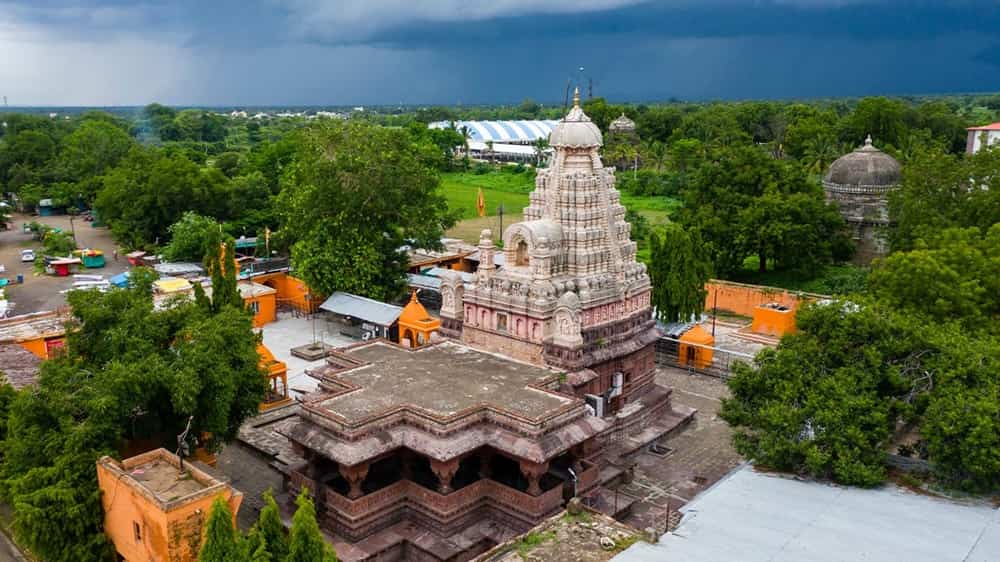
Grishneshwar Jyotirlinga Temple

Grishneshwar Jyotirlinga Temple

5 min drive

landmark

One of the twelve Jyotirlinga shrines dedicated to Shiva, located just outside the Ellora complex gate.

Where to stay

Where to stay near Ellora Caves

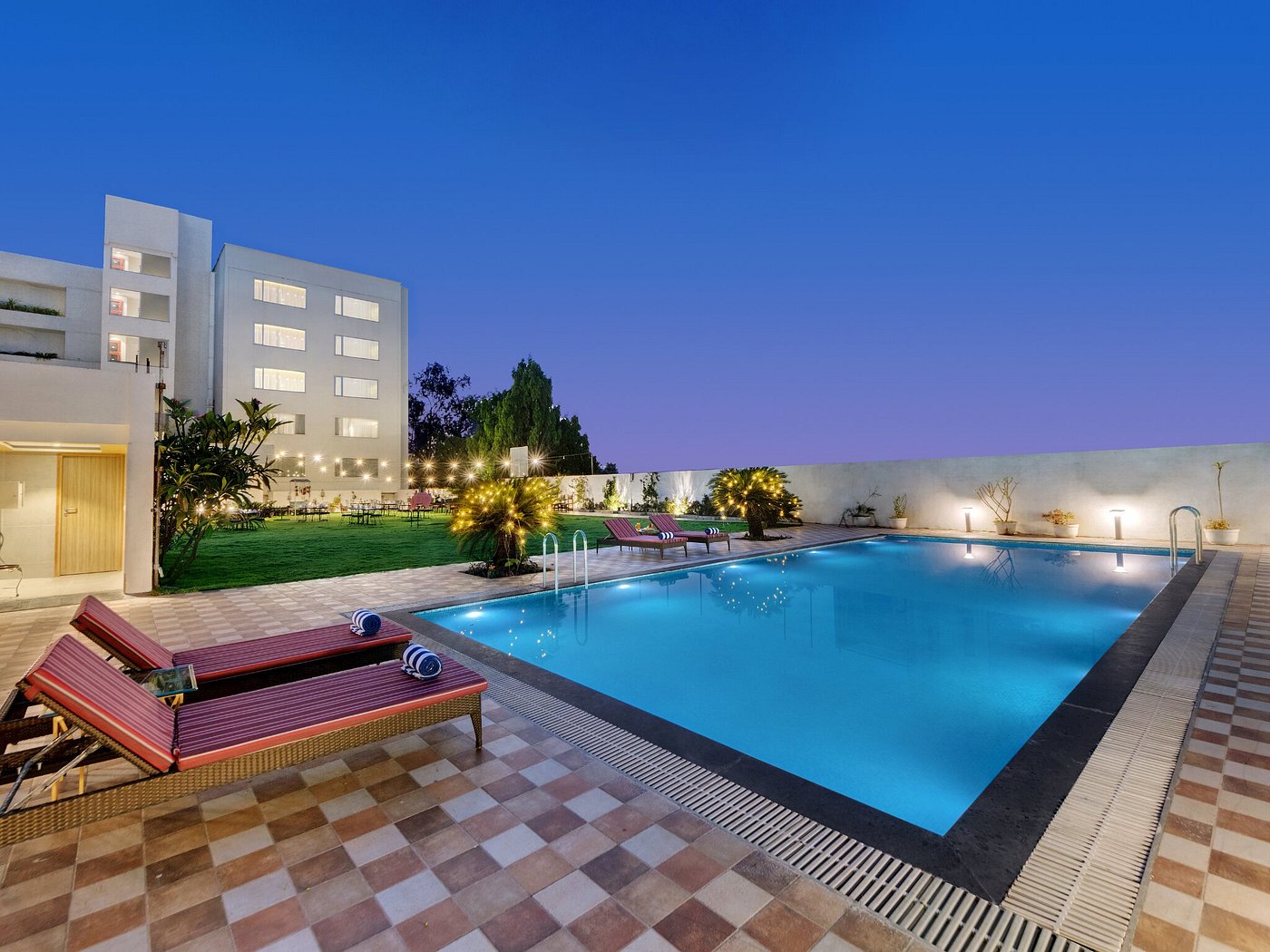
Aurangabad city center

Aurangabad city center

30-40 min drive

mid-range

Widest choice of hotels and guesthouses, close to the airport and railway station.

Ready for Adventure?

Join thousands of happy travelers who have discovered this incredible experience

Book Your Experience Now